
The digital vs. analog debate isn’t just taking place in consumer electronics; it’s playing out in the security industry as well. Over the last decade, many security providers and businesses have embraced all-digital IP security cameras, and have turned to upgrading existing closed-circuit systems.
IP security cameras, or Internet Protocol cameras, are web-connected cameras that transmit video and audio wirelessly. These WiFi-enabled cameras differ from wired, analog systems, in that they don’t require connection directly to a storage hard drive. Instead, they connect wirelessly to hard-drives, connected memory systems, cloud-based servers or stream video on the web.
For businesses, IP cameras present some serious benefits over their analog predecessors, including better image quality and remote accessibility. And these benefits will only continue to get better as the technology improves. Here are 10 reasons why you should consider IP cameras:
-
Easy and Affordable Setup:
Many of today’s IP security cameras are plug-and-play, out-of-box solutions, like the SEAHAWK 605-24WX, a WiFi-enabled dome camera. That means they can be deployed in a matter of minutes, and they don’t require deep technical expertise for set-up. Plus, IP security camera installation doesn’t require extensive infrastructure, drastically cutting start-up costs.
-
Simplified Video Management:
Since the data from IP cameras is stored remotely on web-connected devices, videos can be accessed from anywhere. Videos can be accessed on home computers, smartphones and tablets at any time. Plus, digital video simplifies management; videos are searchable and can be organized by date, camera location and time. Management has come a long way from the rewinding that’s necessary with VHS security systems.
-
Improved Image Quality:
Today’s fixed and PTZ (pan, tilt, zoom) security cameras record video in full HD, and no image data is lost when they’re transferred to storage. Plus, the technology enables clearer, higher resolution images, making it easier to distinguish objects, faces and animals. IP cameras are also much better at recording high-speed images, which is useful for both indoor and outdoor security.
-
Automated, Smarter Cameras:
Another added benefit: IP cameras are “smarter” than analog cameras. They can be programmed to detect anomalies, obstructions and other odd occurrences, and then send an alert to users via text, e-mail and more. Plus, they’re equipped with motion detection, provide analytics about videos, and can be customized to fit your security needs.
-
Easier Scalability:
Adding additional cameras to a web-connected system doesn’t require new recorders or additional cables. Instead, system expansion is easier and these systems are extremely flexible. That means, as your company grows, your security system easily grow with you. Plus, network-IP cameras can be integrated with other systems, like alarms, motion-detection lighting systems and access control systems to provide enhanced security.
-
Cost Effective:
The cost of installing an IP security system has dropped greatly in recent years, and today, installs are priced competitive compared to analog systems. One reason is that analog systems require special cables and more data storage hardware. Some IP cameras are WiFi enabled, meaning they don’t require cables, and other can transmit data on a single, lower-cost cable. Plus, with cloud-connected IP cameras, there’s no need to invest in infrastructure like VHS recorders or DVR, which can add to the cost of implementing an analog system.
-
User Friendliness:
Both IP cameras and the networks they connect to are designed with the user in mind. That means many are plug-and-play – you can connect the camera to the web in minutes – and data management is easier for non-technical people. Newer cameras are also available with smartphone and tablet connectivity, which make them even easier to manage.
-
Great Durability:
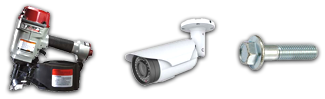
Both indoor and outdoor IP cameras have come a long way in terms of durability. There are waterproof and weatherproof IP cameras available that are perfect for outdoor security, and the housing options can match any architecture, including dome cameras and bullet cameras of all colors.
-
Remote Accessibility and Control:
Another great feature of web security cameras: They can be controlled remotely. For instance, there are many PTZ IP cameras available that can be repositioned remotely via a smartphone, tablet or desktop. Other controls like on/off, focus and automated settings like timed pans can be set over the web.
-
Encrypted Data Security:
The majority of today’s IP security systems encrypt the transmitted data, adding an additional layer of security.
A Few Disadvantages of IP Security Cameras
Clearly, there are many great benefits to upgrading an existing security system or installing a new one. But there are also a few disadvantages compared to analog systems that you should consider.
- For instance, an all-digital system requires more bandwidth on your network when the cameras are recording, which can add to networking costs. Fortunately, data transmission has come a long way, and the broadband requirements are dropping.
- Additionally, some systems require a software license for each camera, which can be costly with larger scale projects.
- And finally, some IP cameras must be placed within a certain distance of the network, which limits where they can be positioned and may require you to purchase additional equipment.
Deelat.com is your source for affordable commercial, residential and industrial IP security cameras. We provide the best prices on new IP security systems, and have hundreds of makes and models to choose from.
 Close Menu